
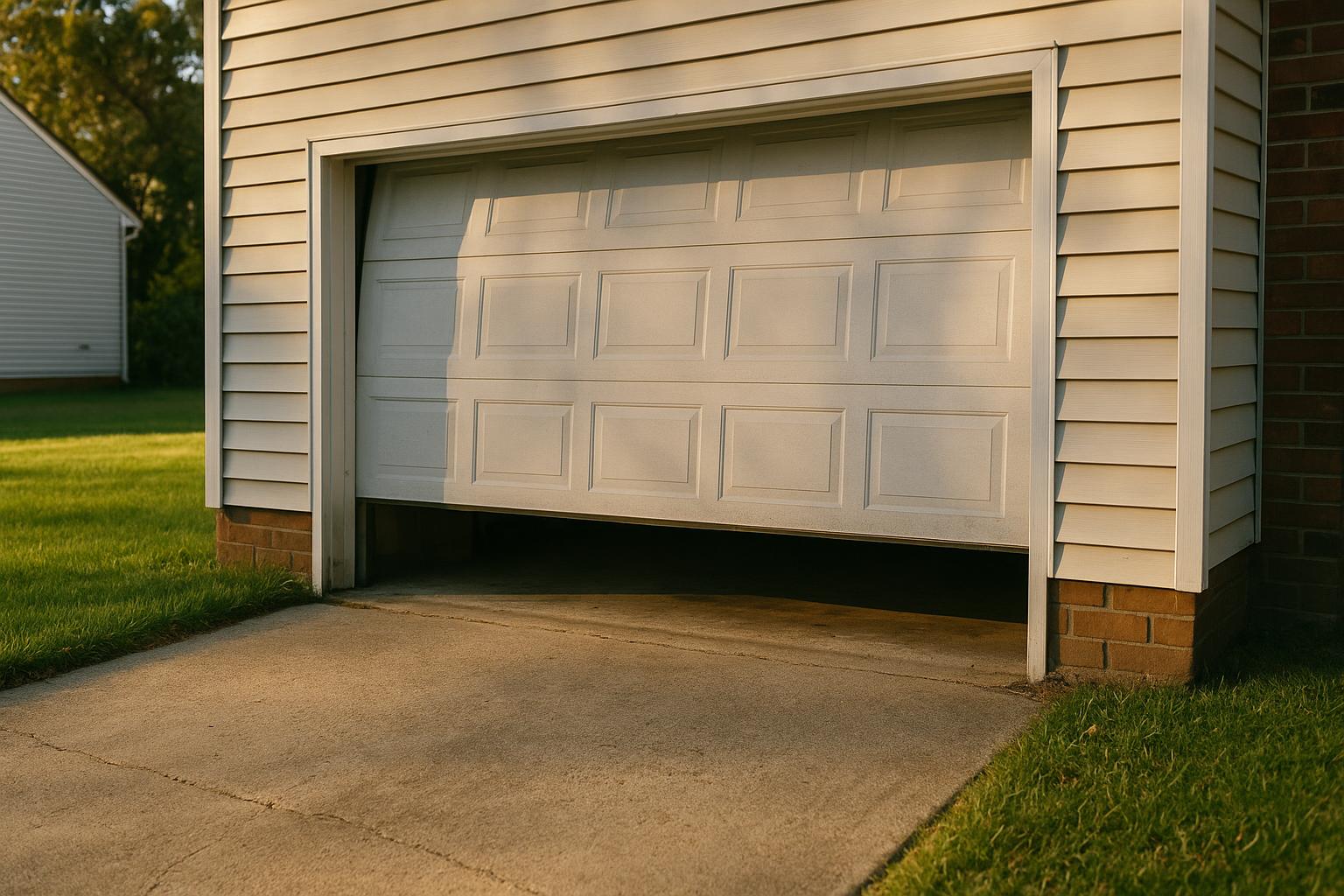
That Frustrating Moment When Your Garage Door Won't Stay Closed
You press the button on your remote, watch your garage door glide downward, and then — just before it reaches the floor — it stops and reverses back up. You try again. Same thing. Maybe it works on the third attempt, maybe it doesn't. Either way, you're left standing in your driveway wondering what's going on.
This is one of the most common garage door complaints we hear from homeowners across Virginia Beach, and the good news is that it's almost always fixable. The bad news? Ignoring it can leave your garage — and everything inside it — exposed to weather, pests, and security risks.
Let's walk through the most likely reasons your garage door reverses before hitting the floor and what you can do about each one.
Understanding the Safety Reversal System
Before we dive into causes, it helps to understand why your garage door is designed to reverse in the first place. Federal law has required garage door openers to include an auto-reverse mechanism since 1993. This system exists to prevent the door from closing on a person, pet, or object.
There are two main components that trigger a reversal:
- Photo-eye sensors: Two small sensors mounted near the bottom of the door tracks on either side. They send an invisible beam across the opening. If anything breaks that beam, the door reverses.
- Mechanical pressure sensitivity: If the door encounters physical resistance while closing, the opener's force settings tell it to reverse direction.
When your door reverses unexpectedly, one of these two systems is almost always involved. The trick is figuring out which one — and why.
Cause #1: Misaligned or Dirty Photo-Eye Sensors
This is the number one reason garage doors reverse prematurely, and it's often the easiest to fix. The photo-eye sensors on either side of your garage door opening need to be perfectly aligned to maintain their infrared beam. If one gets bumped — by a bike, a lawnmower, a kid's toy — the beam breaks and the door thinks something is in the way.
Here's what to check:
- Look at both sensors. Most models have a small LED light. If one is blinking or off, that sensor may be misaligned.
- Gently adjust the sensor bracket until the light becomes steady.
- Wipe both sensor lenses with a soft cloth. Dust, cobwebs, and moisture from Virginia Beach's humid climate can cloud the lenses enough to disrupt the beam.
If you live near the oceanfront, salt air corrosion on sensor wiring is another possibility we see regularly. In that case, the wiring connections may need to be cleaned or replaced.
Cause #2: Incorrect Close-Force Settings
Your garage door opener has adjustable force settings that control how much resistance the motor will push through before reversing. If the close-force setting is too low, the door may interpret normal friction — from weather seals, slightly dirty tracks, or even temperature changes — as an obstruction and reverse.
Most openers have two small adjustment screws or dials on the back or side of the motor unit, labeled for open force and close force. Increasing the close-force setting slightly can sometimes solve the problem. However, be cautious: setting the force too high defeats the purpose of the safety mechanism.
Our recommendation: If you're not comfortable adjusting force settings yourself, call a professional. Setting these incorrectly can create a genuine safety hazard, especially in homes with children.
Cause #3: Damaged or Worn Tracks
Garage door tracks guide the rollers as the door opens and closes. If a track is bent, dented, or has accumulated debris, the door may bind or stick partway down. The opener senses the extra resistance and reverses.
Visually inspect both tracks from top to bottom. Look for:
- Visible bends or dents in the metal
- Gaps between the track and the wall-mounting brackets
- Buildup of dirt, leaves, or small objects in the track channel
Minor debris can be cleaned out with a rag. But bent tracks should be handled by a technician. Attempting to bend them back into shape without proper tools can make the problem worse or cause the door to come off the tracks entirely.
Cause #4: Broken or Worn Springs
Your garage door springs bear the weight of the door and make it possible for the opener to lift and lower it. When a spring is weakening or has partially broken, the door becomes heavier than the opener expects. On the way down, the uneven weight distribution can trigger the auto-reverse.
Signs of spring trouble include:
- The door feels unusually heavy when you lift it manually
- You hear loud creaking or popping sounds during operation
- The door descends unevenly, with one side lower than the other
Important safety note: Garage door springs are under extreme tension. A snapping spring can cause serious injury. Spring replacement is not a DIY job — this is one repair that should always be left to trained professionals.
Cause #5: Travel Limit Settings Need Adjustment
The travel limit tells your opener exactly how far the door should move in each direction. If the down-travel limit is set too far, the door reaches the floor and keeps trying to push down. The opener reads this as an obstruction and reverses.
This often happens after a new opener installation or when weather stripping is added to the bottom of the door. Adjusting the down-travel limit on most openers involves turning a small screw in quarter-turn increments until the door closes fully and stops without reversing.
Cause #6: Wiring Issues or Opener Malfunction
If you've checked everything above and the problem persists, the issue may be electrical. Frayed wires between the sensors and the motor unit, a failing logic board inside the opener, or even power surges — which are not uncommon during Virginia Beach storm season — can cause erratic reversal behavior.
Diagnosing electrical problems requires testing with a multimeter and understanding the opener's wiring schematic. This is another situation where professional help saves time and prevents further damage.
When to Call a Professional
Some of these fixes are straightforward enough for a handy homeowner to tackle — cleaning sensors, clearing track debris, or making minor adjustments. But several of these causes involve components under high tension or electrical systems that can be dangerous without proper training.
Here's a simple rule of thumb: if the fix involves springs, cables, or electrical wiring, call a pro.
At Virginia Beach Garage Door, we troubleshoot reversal issues every week for homeowners across Virginia Beach, Chesapeake, Norfolk, and the surrounding Hampton Roads communities. We'll diagnose the exact cause, explain your options, and get your door closing properly — usually in a single visit.
Don't Leave Your Garage Open to Trouble
A garage door that won't close all the way isn't just annoying — it's a security risk, an energy waste, and an invitation for moisture damage in our coastal climate. The longer you put off addressing it, the more likely a small issue turns into a bigger, more expensive repair.
If your garage door keeps reversing and you can't pinpoint the cause, give us a call. We'll get it sorted out so you can get back to pressing that button and walking away with confidence.