
Your Garage Door Shouldn't Sound Like That
You press the button, and instead of the smooth hum you're used to, your garage door greets you with a symphony of grinding, squealing, or banging. If you're a homeowner in Virginia Beach, you've probably experienced this at least once — and you've probably wondered whether it's something you can ignore or something that needs immediate attention.
The truth is, a noisy garage door is almost always trying to tell you something. Some sounds are minor annoyances with easy fixes, while others are early warnings of a serious mechanical failure. Knowing the difference can save you money, prevent safety hazards, and extend the life of your garage door system.
Let's break down the most common garage door noises, what causes them, and what you should do about each one.
Squealing or Screeching Sounds
A high-pitched squeal when your garage door opens or closes is one of the most common complaints we hear from homeowners across Virginia Beach and the surrounding Hampton Roads area. This sound usually points to one of two issues:
- Lack of lubrication: The rollers, hinges, and tracks need regular lubrication to operate smoothly. Over time, the factory lubricant dries out, and metal-on-metal contact creates that unpleasant screeching sound.
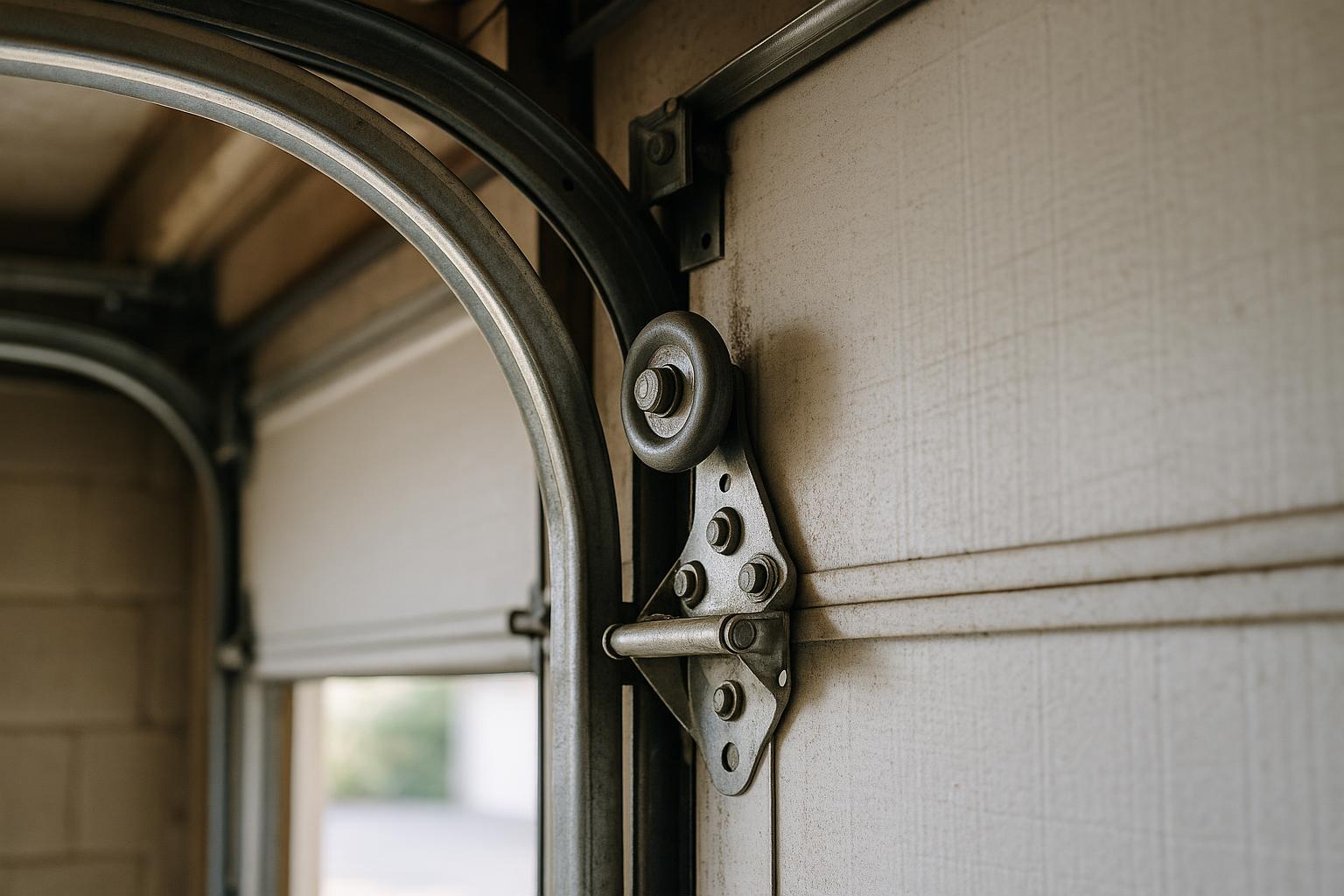
- Worn-out rollers: If your garage door uses steel rollers, they tend to get noisy as they age. Nylon rollers are a quieter alternative and last longer in the humid coastal climate we experience here in Virginia Beach.
The fix is often straightforward. Applying a silicone-based or lithium-based garage door lubricant to the rollers, hinges, springs, and tracks can eliminate the squeal almost instantly. Avoid using WD-40 as a long-term lubricant — it's a solvent, not a true lubricant, and it can actually attract dirt and dust that make the problem worse over time.
Grinding or Scraping Noises
A grinding sound is more concerning than a squeal. It typically means something is rubbing against something it shouldn't be. Common causes include:
- Misaligned tracks: If the vertical or horizontal tracks have shifted even slightly, the door panels or rollers can scrape against the metal as they travel. This creates a harsh grinding noise and can cause premature wear on both the rollers and the tracks.
- Bent track sections: A dent or bend in the track — sometimes caused by accidentally bumping it with a car or heavy object — can create a grinding point that the door struggles to pass through.
- Damaged rollers: Rollers that are cracked, chipped, or have flat spots will grind against the track instead of rolling smoothly.
If you hear grinding, it's a good idea to visually inspect the tracks for obvious bends or gaps. However, track realignment is best left to a professional. Improperly adjusted tracks can cause the door to come off its rails entirely, which is a serious safety hazard.
Loud Banging or Popping
A sudden bang or pop when the door moves can startle anyone. This noise is often related to:
- Torsion spring issues: As torsion springs wind and unwind, they can make popping or banging sounds if they're not properly lubricated or if they're beginning to weaken. A loud single bang could also indicate a spring has broken, which requires immediate professional repair.
- Panel flex: Older or thinner garage door panels can flex under tension, creating a popping sound as they move through the curved section of the track.
- Opener chain or belt tension: If the chain on your garage door opener is too loose or too tight, it can slap against the rail or jerk the door, producing banging sounds during operation.
Banging noises should never be ignored. If a torsion spring breaks completely, the door can become inoperable or even dangerous. This is one of those situations where calling a professional right away is the smart move.
Rattling and Vibrating
A persistent rattle while the door operates usually means something is loose. The most common culprits are:
- Loose hardware: The nuts, bolts, and screws that hold your garage door system together can vibrate loose over time. This is especially common in Virginia Beach homes where we get occasional storms and high winds that put extra stress on the door.
- Loose opener mounting: If the garage door opener unit itself isn't securely fastened to the ceiling, it can vibrate and rattle with every cycle.
- Worn hinges: Hinges that connect the door panels can develop play as they wear, creating a rattling sound as the panels shift during movement.
Tightening the hardware is a simple DIY task that can make a big difference. Use a socket wrench to check all visible bolts and brackets. Just be careful not to overtighten — you can strip the holes or warp the brackets if you go too far.
Humming Without Movement
If you hear the motor humming but the door doesn't move, the problem is usually with the opener rather than the door itself. Possible causes include:
- Stripped gears inside the opener: The nylon gears inside many residential openers can strip over time, especially if the opener is undersized for the weight of the door.
- Disconnect engaged: The emergency release cord may have been pulled, disconnecting the opener from the door. This is an easy fix — simply re-engage the trolley.
- Blocked or stuck door: If something is physically preventing the door from moving — ice, debris, or a broken spring — the motor will hum as it tries and fails to lift the door.
A humming motor that can't move the door is working under extreme strain. If the issue isn't the disconnect cord, turn off the opener and call a technician before the motor burns out.
When to Call a Professional
Some noisy garage door issues are safe and simple to handle on your own — adding lubricant, tightening bolts, or re-engaging the opener trolley. But many of the underlying causes require professional tools, training, and experience to fix safely.
Here's a general rule: if the noise involves the springs, cables, tracks, or opener motor internals, call a professional. These components are under high tension or involve electrical systems that can cause serious injury if handled incorrectly.
At Virginia Beach Garage Door, we serve homeowners and businesses throughout Virginia Beach, Norfolk, Chesapeake, Hampton, Newport News, and Suffolk. When your garage door starts making sounds it shouldn't, we'll diagnose the issue quickly and give you an honest recommendation — whether it's a simple adjustment or a component replacement.
Don't Wait Until the Noise Becomes a Breakdown
A noisy garage door is more than just an annoyance. It's an early warning system. The sounds your door makes can tell you exactly what's going wrong — if you know how to listen. Addressing these issues early almost always costs less than waiting for a complete failure.
If your garage door has been getting louder, making new sounds, or just doesn't sound right, don't ignore it. A quick inspection and tune-up can restore quiet, smooth operation and give you peace of mind that your door is safe and reliable for your family.