
The One-Sentence Rule
If people spend real time in your garage, or it shares a wall or ceiling with living space, insulation is worth the money; if it's just a box that holds your car and some bins, you're probably paying for a feature you'll never feel.
Like most rules of thumb, this one has exceptions. A garage under a bedroom, a garage that houses your HVAC equipment, or a garage where you store wine, musical instruments, paint, or electronics all benefit from insulation even if nobody ever hangs out in there. On the flip side, a detached garage that's just for parking and holiday decorations usually doesn't need it, no matter how cold it gets in January.
What R-Value Actually Measures
R-value measures how well a material resists heat flow. Higher numbers mean heat moves through more slowly in both directions — so a higher R-value door keeps summer heat out and winter cold in, and vice versa. It does not mean the garage will feel like a conditioned room, and it doesn't account for anything happening around the door, only through it.
Garage doors come in a few basic constructions: single-layer steel with no insulation (R-value close to zero), double-layer with a polystyrene insert sandwiched behind the steel skin, and triple-layer with injected polyurethane foam between steel or vinyl backing. The triple-layer doors are the most efficient and usually the most durable, but they also cost more and weigh more, which matters for your opener and springs.
Where the Real Leaks Are
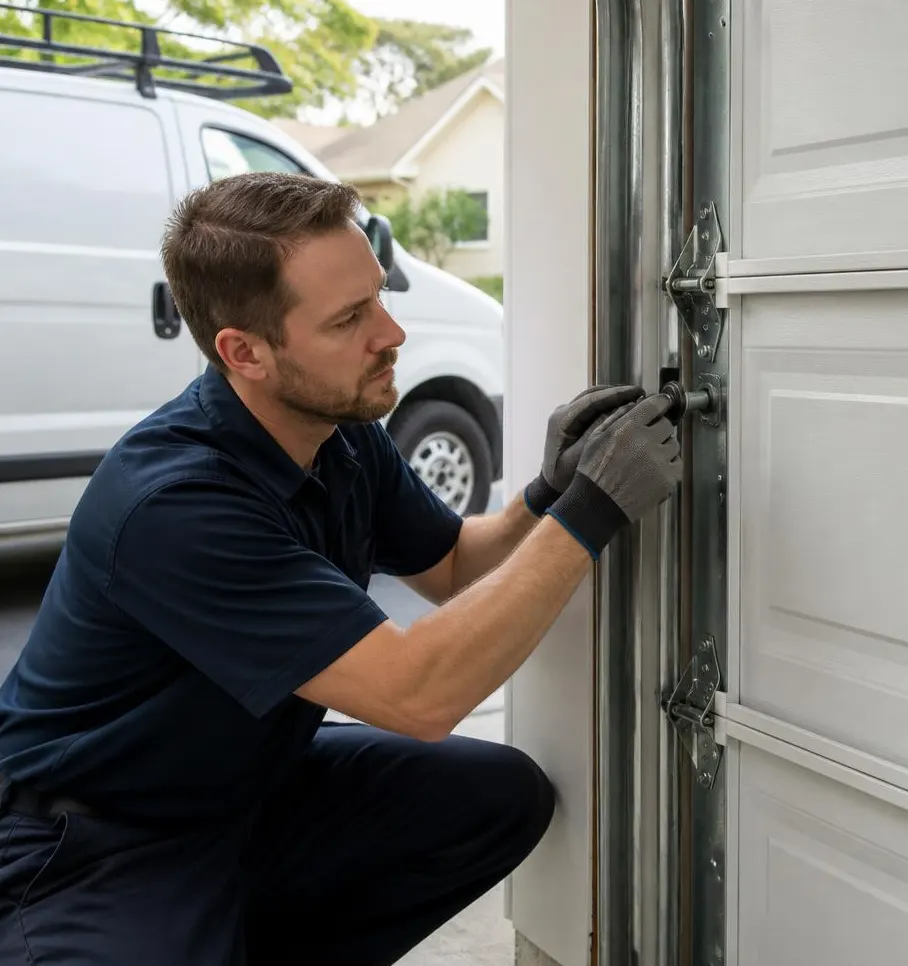
Here's the part that settles most arguments: a high R-value panel does nothing if the door doesn't seal well against the frame. Gaps under the bottom seal, worn weatherstripping along the sides and top, and loose panel sections let far more air through than the panel material itself. A well-sealed single-layer door can sometimes outperform a poorly sealed insulated one. Before spending extra on R-value, it's worth having someone check the actual seals and hardware — that's often the cheaper fix and the one that makes the bigger difference.
Who Genuinely Benefits
- Attached garages with living space above or beside them — common in older Virginia Beach and Norfolk homes where that shared wall was never insulated to modern standards. An insulated door reduces how much heat or cold transfers into the house through the garage.
- Converted garages and workshops used year-round, especially in humid summers when an uninsulated steel door radiates heat into the space all afternoon.
- Garages with ductwork or an HVAC unit inside them — insulation keeps that equipment from working against outdoor temperature swings.
- Anyone storing temperature-sensitive items — paint, electronics, certain woodworking tools — where condensation from humid coastal air is a concern. Insulated doors with a vinyl backing also resist the condensation drip that bare steel panels get when humid air meets a cold surface.
Who's Paying for Nothing
- Detached, unheated garages used purely for parking and storage — there's no conditioned space on the other side to protect, so the R-value has nothing to work for.
- Garages with bad seals and old weatherstripping — fix that first; a new insulated door on a leaky frame wastes the upgrade.
- Attached garages with a properly insulated interior wall already separating the garage from living space — the door is a smaller piece of that thermal picture than people assume.
A Local Note on Climate
Virginia Beach's mix of humid summers and icy winters means both heat transfer and condensation are in play, not just one or the other. If you're debating between a standard and insulated door, think about which problem actually affects your household — a hot garage that bakes all summer, or a cold snap that makes everything inside stiff and sluggish. Heavier insulated doors also tend to be built with sturdier steel and stronger bracing, which holds up a bit better during the area's coastal storms, though that's a side benefit of construction quality, not the R-value number itself.
When to Call Virginia Beach Garage Door
If you're not sure whether your garage actually needs insulation or just better seals, that's exactly the kind of question worth having someone look at in person rather than guessing from a spec sheet. Our technicians can check your current door's condition, measure how well it's sealing, and walk you through real options during a Garage Door Installation consultation or a routine Garage Door Maintenance visit — including whether a seal replacement would solve the problem without a full door swap.
If you're in Virginia Beach, Norfolk, Chesapeake, Hampton, Newport News, Suffolk, Portsmouth, or Williamsburg and want a straight answer before you spend money either way, give Virginia Beach Garage Door a call.