
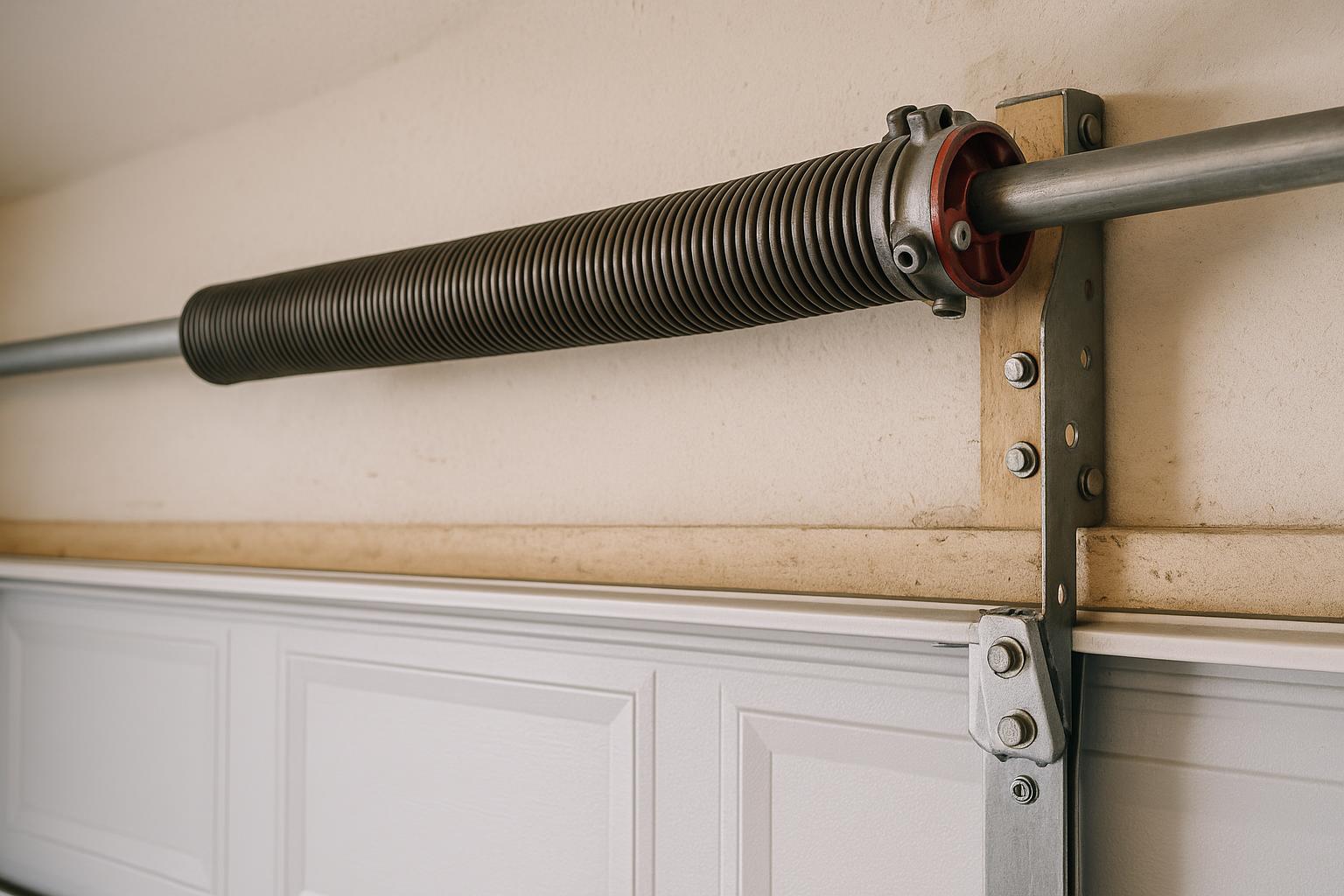
Your Garage Door Springs Are Working Harder Than You Think
Every time you open or close your garage door, a pair of heavy-duty springs does the real heavy lifting. Whether you have torsion springs mounted above the door or extension springs along the horizontal tracks, these components bear the full weight of your garage door — often 150 to 250 pounds or more. Over time, that repeated stress takes a toll.
Most garage door springs are rated for around 10,000 cycles, with one cycle being a single open-and-close. For the average Virginia Beach household that uses the garage door three to four times a day, that translates to roughly seven to ten years of service. But coastal humidity, salt air, and temperature swings along the Hampton Roads corridor can accelerate wear and shorten that lifespan.
Knowing when your springs are failing — before they snap — can save you from an inconvenient breakdown, costly secondary damage, or even a serious injury.
Warning Signs Your Garage Door Springs Are Wearing Out
Spring failure rarely happens without some advance notice. Here are the most common signs Virginia Beach homeowners should watch for:
1. The Door Feels Heavier Than Usual
Try this simple test: disconnect the automatic opener by pulling the emergency release cord, then manually lift the door about halfway. A properly balanced door should stay in place on its own. If it feels unusually heavy, slides back down, or requires significant effort to lift, your springs have likely lost tension and are no longer counterbalancing the door's weight effectively.
2. The Door Opens Unevenly or Crooked
If one side of your garage door rises faster than the other, it often means one spring has weakened more than its counterpart. This uneven movement puts extra strain on the tracks, rollers, and opener, and it can lead to the door jamming or coming off its tracks entirely.
3. You Hear a Loud Bang From the Garage
A sudden, loud bang — almost like a firecracker — coming from your garage when no one is near the door is a classic sign that a spring has snapped. The stored energy releases all at once, and the broken spring often unwinds violently. If you hear this sound, do not attempt to operate the door. Call a professional immediately.
4. There's a Visible Gap in the Spring
Take a look at the torsion spring above your garage door. An intact spring is a continuous, tightly wound coil. If you see a gap — a section where the coils have separated — the spring is broken. This is one of the easiest visual checks you can do, and it requires no tools or technical knowledge.
5. The Opener Struggles or Stops Mid-Cycle
Your garage door opener is designed to move a balanced door, not to lift the full weight on its own. When springs lose tension or break, the opener has to work dramatically harder. You might notice it straining, moving slower than normal, or stopping partway through the cycle. Continuing to use the opener in this condition can burn out its motor.
6. The Door Slams Shut Quickly
Healthy springs control the speed at which your garage door closes. If the door drops faster than normal or slams to the ground, the springs are no longer providing adequate resistance. This is a safety hazard, especially in homes with children or pets.
Why You Shouldn't Replace Garage Door Springs Yourself
We understand the DIY spirit — it's strong here in Virginia Beach, and for good reason. But garage door springs are one of the few home repair jobs that professionals universally recommend leaving to the experts. Here's why:
- Extreme tension: Torsion springs store a tremendous amount of energy. A spring that releases unexpectedly during removal or installation can cause severe injuries or even fatalities.
- Specialized tools required: Proper spring replacement requires winding bars, a precise understanding of spring rates, and calibrated adjustments. Using the wrong tools or techniques can be dangerous and can damage your door system.
- Matching matters: Springs must be matched to the exact weight and size of your door. Installing the wrong spring leads to poor balance, premature wear on other components, and potential safety issues.
A trained technician can complete a spring replacement safely in about an hour, and the peace of mind is well worth the service call.
What Happens During a Professional Spring Replacement
When you call a garage door company for spring replacement, here's what you can generally expect:
- Inspection: The technician examines the entire door system — springs, cables, rollers, tracks, and opener — to assess the full scope of the issue.
- Spring removal: The old or broken springs are carefully unwound and removed using professional-grade tools.
- New spring installation: Replacement springs matched to your door's specifications are installed and wound to the correct tension.
- Balance testing: The technician tests the door's balance manually and adjusts as needed to ensure smooth, even operation.
- Full system check: Safety features like the auto-reverse mechanism and photo-eye sensors are tested to confirm everything is working properly.
At Virginia Beach Garage Door, we carry a wide inventory of springs on our service trucks, which means most replacements can be completed in a single visit without waiting for parts to be ordered.
How to Extend the Life of Your Garage Door Springs
While springs will eventually wear out no matter what, a little preventive care goes a long way — especially in our coastal Virginia Beach climate where moisture and salt air can accelerate corrosion.
- Lubricate regularly: Apply a silicone-based or lithium-based spray lubricant to your springs every three to four months. This reduces friction, prevents rust, and helps the coils move smoothly.
- Schedule annual maintenance: A yearly professional tune-up catches early signs of wear before they become emergencies. The technician can also check spring tension and rebalance the door if needed.
- Don't ignore small problems: Squeaking, jerky movement, or slight imbalances are early indicators. Addressing them promptly prevents bigger — and more expensive — failures down the road.
- Consider high-cycle springs: If you use your garage door frequently, upgrading to springs rated for 25,000 or even 50,000 cycles can significantly extend the time between replacements.
When It's Time, Don't Wait
A failing or broken garage door spring isn't just an inconvenience — it's a safety concern. A door that won't open can trap your car inside the garage. A door that drops too quickly can injure someone. And running your opener against a broken spring can lead to a costly motor replacement on top of the spring repair.
If you've noticed any of the warning signs we've discussed, it's time to have your springs inspected. Homeowners across Virginia Beach, Norfolk, Chesapeake, and the greater Hampton Roads area trust Virginia Beach Garage Door for fast, honest spring replacement service. We show up on time, explain what we find, and get your door back in safe working order — usually the same day you call.
Don't wait for a complete failure. Give us a call and let's make sure your garage door is balanced, safe, and ready for whatever the season brings.