
Your Garage Door Is the Largest Moving Part of Your Home
Think about how many times you open and close your garage door each day. For most Virginia Beach families, it's at least four times — maybe more if you have teenagers coming and going or use the garage as your main entrance. Over the course of a year, that adds up to well over a thousand cycles.
Despite all that use, the garage door is one of the most neglected parts of the home when it comes to regular maintenance. Most homeowners don't think about their garage door until it makes a strange noise, gets stuck, or stops working entirely. By that point, a minor issue has often turned into an expensive repair.
So how often should you actually service your garage door? And what does proper maintenance look like? Let's break it down.
The Short Answer: At Least Once a Year
At a minimum, your garage door should receive a professional inspection and tune-up once per year. Think of it like an annual checkup for your car — it's designed to catch small problems before they become big ones and to keep everything running safely and efficiently.
If your garage door is older than ten years, gets heavy daily use, or has shown signs of wear, you may benefit from scheduling service twice a year. Here in Virginia Beach, the combination of coastal humidity, salt air, and seasonal temperature swings can accelerate wear on garage door components, making regular attention even more important.
What Does a Garage Door Tune-Up Include?
A proper garage door maintenance visit isn't just a quick glance and a squirt of lubricant. A thorough tune-up should cover all of the following:
Visual Inspection
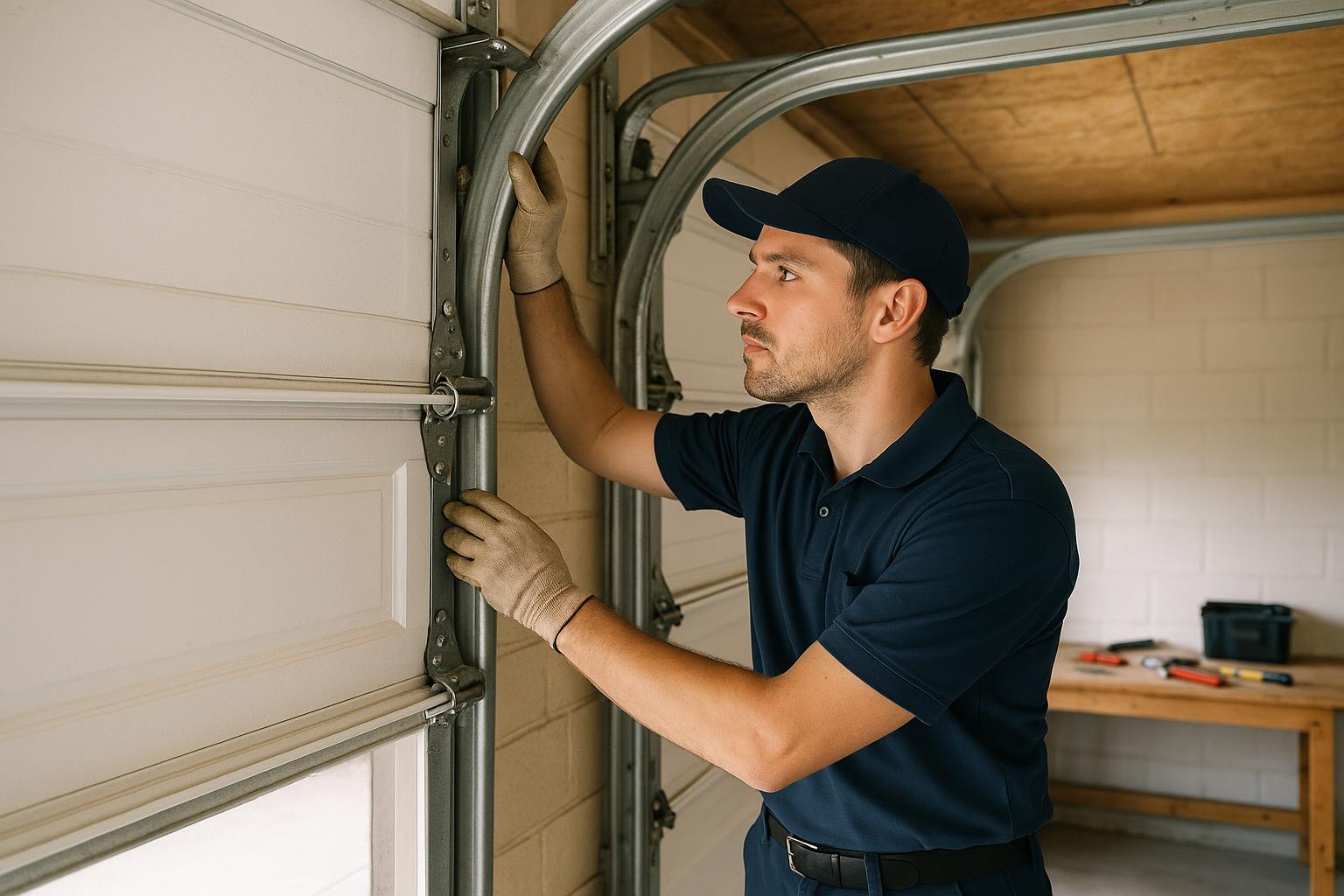
A technician will examine the entire door system — panels, tracks, rollers, cables, springs, hinges, and weatherstripping — looking for signs of wear, rust, damage, or misalignment.
Lubrication
All moving parts need to be lubricated with a garage door-specific lubricant. This includes the springs, rollers, hinges, and tracks. Proper lubrication reduces friction, minimizes noise, and extends the life of your components.
Balance Test
An unbalanced garage door puts extra strain on the opener and springs, leading to premature failure. During a balance test, the technician disconnects the opener and manually lifts the door to the halfway point. If it stays in place, the balance is good. If it slides up or down, the springs need adjustment.
Safety Reversal Test
Modern garage doors are equipped with auto-reverse mechanisms that prevent the door from closing on a person, pet, or object. Your technician will test both the mechanical reversal (using a block of wood on the ground) and the photo-eye sensors to make sure they're functioning correctly.
Hardware Tightening
The constant vibration of a moving garage door loosens bolts and brackets over time. A maintenance visit includes tightening all hardware to keep the system secure and aligned.
Weatherstripping Check
The rubber seal along the bottom of your garage door and the weatherstripping around the frame keep out rain, wind, pests, and debris. In Virginia Beach, where we deal with everything from summer storms to nor'easters, intact weatherstripping is essential. Cracked or missing seals should be replaced promptly.
Opener Evaluation
Your garage door opener's force settings, travel limits, and battery backup (if applicable) should all be checked and adjusted as needed.
What You Can Do Between Professional Visits
Annual or biannual professional service is important, but there are simple things you can do on your own to keep your garage door in good shape between visits:
- Listen for changes. If your garage door starts squeaking, grinding, or making any new noise, don't ignore it. Unusual sounds often signal a developing problem.
- Watch the door move. Stand inside the garage and watch the door go up and down. It should move smoothly without jerking, hesitating, or swaying to one side.
- Keep the tracks clean. Wipe down the inside of the tracks with a damp cloth to remove dirt and debris. Don't use WD-40 on the tracks — it attracts dust and can actually make things worse.
- Test the photo-eye sensors. Place an object in the door's path and try to close it. The door should reverse immediately. If it doesn't, clean the sensor lenses and check their alignment.
- Inspect the panels and hardware. Look for dents, cracks, rust, or loose bolts. Catching these issues early can prevent bigger problems down the road.
Why Maintenance Matters More Near the Coast
Living near the coast in Virginia Beach has its perks, but the salty, humid air is tough on metal components. Garage door springs, cables, rollers, and tracks are all susceptible to corrosion when exposed to salt air over time. Regular lubrication and inspection help combat this, but coastal homeowners should be especially vigilant about rust and corrosion.
If you have a steel garage door, check the paint and finish regularly. Any chips or scratches in the coating expose the metal underneath to moisture and salt, which can lead to rust. Touch up any damage promptly to protect the door's surface.
The Cost of Skipping Maintenance
It's tempting to skip maintenance when your garage door seems to be working fine. But consider the math. A professional tune-up is a modest investment — typically far less than the cost of an emergency repair call when a spring snaps at 7 a.m. on a Monday morning, or when a worn-out roller derails and jams the door shut with your car trapped inside.
Regular maintenance also extends the overall lifespan of your garage door system. A well-maintained door and opener can last significantly longer than one that's been neglected, saving you thousands of dollars in premature replacement costs.
When to Call a Professional Between Scheduled Visits
Even with regular maintenance, issues can come up unexpectedly. Contact a garage door professional right away if you notice any of the following:
- The door is visibly off-track or crooked
- You hear a loud bang from the garage (often a broken spring)
- The door won't open or close at all
- Cables appear frayed or loose
- The door feels unusually heavy when lifted manually
- The opener runs but the door doesn't move
These situations can be dangerous to address on your own, especially anything involving springs or cables, which are under extreme tension.
Keep Your Garage Door Running Smoothly in Virginia Beach
Your garage door works hard for you every single day. A little preventive care goes a long way toward keeping it reliable, safe, and quiet. Whether it's been a year since your last service or you can't remember the last time anyone looked at your door, now is a great time to schedule a maintenance visit.
At Virginia Beach Garage Door, we provide thorough tune-ups and inspections for homeowners across Virginia Beach, Norfolk, Chesapeake, and the surrounding Hampton Roads area. Our technicians know exactly what to look for and how to keep your door performing at its best — no matter what the coastal weather throws at it.