
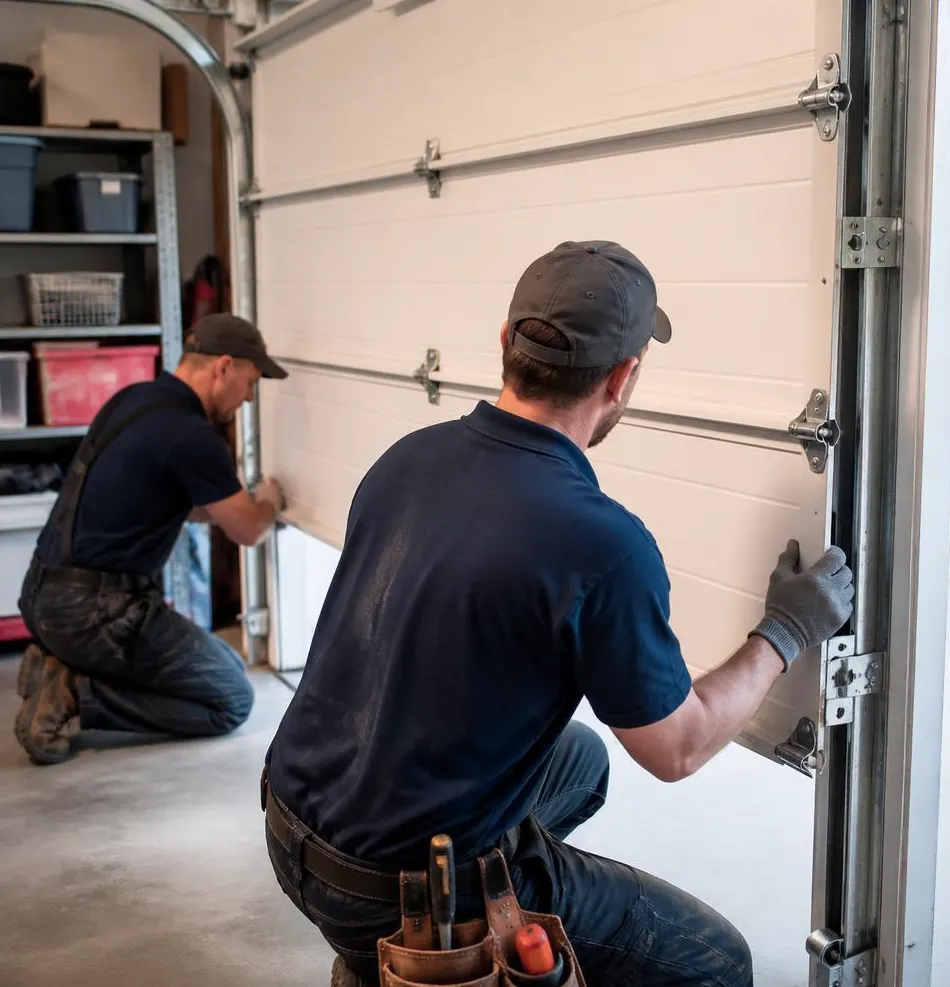
The Quick Fix That Makes Things Worse
Here's the argument: the garage door starts reversing before it hits the floor, or it stops halfway down, or it just feels like it's struggling. One spouse pulls up the little dial or menu on the opener and bumps up the force setting. The door closes. Problem solved, right?
Not quite. Turning up the force is tempting because it works immediately and it's a thirty-second fix with no tools. But force is not meant to override a mechanical problem — it's meant to be a safety limit. When you crank it higher just to make the door close, you're not fixing whatever is actually wrong. You're just telling the motor to push harder until it muscles through the resistance. That resistance doesn't go away. It gets transferred into your door, your opener, and anything or anyone standing in the way.
What Force and Travel Limits Actually Do
Every modern garage door opener has two separate settings, and they do different jobs.
- Travel limits tell the opener exactly where the door should stop — fully open at the top, fully closed at the bottom. Get these wrong and the door stops too early, leaving a gap at the floor, or it keeps straining after it should have stopped.
- Force settings tell the opener how much effort to use before it decides something is blocking the door and reverses. This is the safety feature that's supposed to stop the door if it meets a trash can, a kid's bike, or a person.
These two settings work together. If your travel limit is off, the door has to fight to reach the position you've programmed, which can mean it's pushing against the floor or straining against the track longer than it should. If your force is too high, the opener will push through that resistance instead of catching it — which defeats the whole point of having a safety reversal system.
Why Cranking Up the Force Is a Bad Trade
When you increase force to solve a closing problem, you're usually masking one of these underlying issues:
- Springs that have weakened and can no longer help lift and lower the door smoothly
- A track that's slightly bent or out of alignment
- Rollers or hinges that are worn, rusted, or need lubrication
- A travel limit that's set wrong to begin with
None of those problems get better because the motor is pushing harder. They get worse. A door that's forcing its way shut is putting extra stress on the opener's gears, the drive belt or chain, and the door panels themselves. Over time this shows up as a stripped gear, a snapped cable, or a door that slams the last few inches instead of settling down gently. And because the force is set high, the safety reversal that's supposed to protect people and pets becomes less reliable — it takes more resistance to trigger a reversal, which is exactly backward from what you want.
How Local Weather Plays Into This
Virginia Beach doesn't make this easier. Humid summers can swell wood doors and door-adjacent framing just enough to change how much resistance the opener meets near the bottom of the travel. Icy winter mornings can stiffen springs and thicken old grease on tracks and rollers, so the door needs more real effort to move — which is exactly when someone reaches for the force dial instead of checking the hardware. Heavy rain and coastal storms can also shift foundations and door frames slightly over the years, especially in older housing stock, throwing off alignment that used to be fine. Seasonal changes are a normal reason to recheck your settings. They're not a reason to just turn up the power and hope for the best.
Signs Your Settings Are Off
- The door reverses before reaching the floor, even with nothing blocking it
- The door stops short of fully opening or fully closing
- You hear straining, grinding, or a labored motor sound near the top or bottom of travel
- The door slams the last inch or two instead of settling down
- The safety reversal doesn't trigger when it should — a real safety concern, especially with kids or pets around
How to Check Before You Adjust Anything
Before touching the force dial, watch a full open-and-close cycle and note exactly where the trouble happens. Check that the tracks aren't visibly bent and that rollers spin freely. Lift the door manually (with the opener disconnected) to see if it feels heavy or uneven — that points to spring trouble, not a settings problem. If the door moves smoothly by hand but fights the opener, the settings or the opener itself are the likely culprit.
When to Call Virginia Beach Garage Door
If you've checked the obvious stuff and the door still isn't closing right, it's time for a technician rather than more trial and error with the dial. We handle Garage Door Opener Services to properly set force and travel limits to manufacturer spec, and if the real issue turns out to be worn springs, bent track, or hardware strained from being forced shut, our Garage Door Maintenance visits catch that before it becomes a bigger repair.
If your opener is fighting your door more than it should, give Virginia Beach Garage Door a call. We'll get the settings right and make sure nothing's being forced that shouldn't be — serving homes and businesses throughout Virginia Beach, VA.